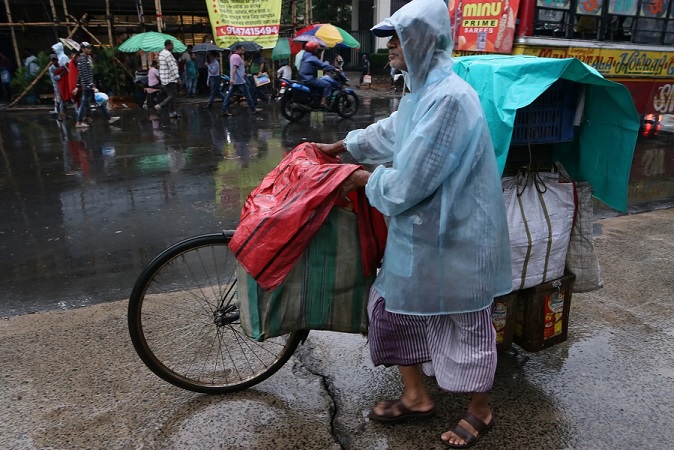

After several consecutive years of heavy rainfall, the meteorological office has stated that this year’s monsoon is likely to be below normal. The rainfall during the June-September period—which accounts for approximately 70% of India’s annual precipitation—is expected to hover at 92% of the long-term average over the past 50 years, implying a potential deficit of 8%. In both 2024 and 2025, rainfall was recorded at 8% above normal levels, resulting in widespread flooding, damage to property and infrastructure, and even loss of life. If the actual rainfall this year aligns with these projections, it would mark the weakest monsoon season since 2019.
Monsoon rains are critical for the rain-fed Kharif season—a period dedicated to cultivating various crops such as rice, maize, sugarcane, pulses, and oilseeds. The sowing of these crops typically commences between late May and early June, while harvesting begins in October. Given that nearly 45% of India’s agricultural land lacks irrigation facilities, the annual monsoon is of paramount importance to farmers.
The likelihood of a below-normal monsoon this year is attributed to the anticipated emergence of the El Niño phenomenon during the latter half of the season. El Niño is a climatic pattern characterized by the warming of surface waters in the eastern Pacific Ocean, a phenomenon that frequently leads to a weakening of monsoon activity across the Indian subcontinent. India last faced a widespread drought in 2015—an El Niño year—characterized by a 14% rainfall deficit. That year, food production declined by 2.3%.
In addition to the risk of low rainfall, Indian agriculture faces another challenge this year. The ongoing conflict in West Asia has disrupted the supply of natural gas, as well as fertilizers such as Urea and Diammonium Phosphate (DAP)—which are imported from that region for the production of nitrogenous fertilizers. Although India is currently in a comfortable position with surplus stocks of rice and wheat, a widespread rainfall deficit could drive up food prices, particularly those of pulses and oilseeds.
Beyond impacting crops, a rainfall deficit also affects drinking water supplies and hydroelectric power generation. Along with the total volume of rainfall, the geographical and monthly distribution of monsoon rains is a crucial factor; this is because prolonged dry spells during critical crop growth stages can adversely affect crop yields.
• Record-breaking heat in March and the second-highest recorded sea temperatures serve as indicators that an El Niño event is approaching.
• According to a new analysis conducted by Ember, up to 90% of India’s electricity demand could potentially be met through solar power and battery storage.
• The number of Indian companies committing to climate action is on the rise; however, progress remains uneven. • Why did India withdraw its proposal to host COP33?
• Erratic weather patterns are having a severe impact on the renowned Alphonso mangoes.
• As more people switch to induction cookstoves due to LPG shortages, India’s peak electricity demand is likely to rise.
• Why is the attainment of criticality by India’s indigenously developed Fast Breeder Reactor a pivotal milestone for its energy future?
• In North India, untimely rains have not only delayed the wheat harvest but also slowed down procurement, resulting in reduced wheat arrivals during the early part of the season.