
In Tamil Nadu, at least seven people were killed and more than 70 workers were affected after an ammonia gas leak at a seafood export company in Periyapalayam today. According to preliminary reports the death toll may rise as rescue and medical operations continue.
The National Disaster Response Force (NDRF), along with specialised Chemical, Biological and Nuclear response teams, launched an immediate rescue operation and worked to contain the leak under strict safety protocols.
Chief Minister C. Joseph Vijay has ordered a high-level inquiry into the incident and directed a three-member committee to submit its report within 24 hours. He said those found responsible would be brought to justice. The Chief Minister also announced an ex gratia of two lakh rupees for the families of each deceased.
The Ammonia Gas Tragedy Incident Report
Facility: St. Peter’s Paul Seafoods Exports Private Limited
Location: Kannigaipair (near Periyapalayam), Tiruvallur District, Tamil Nadu
Most probable point of failure? Commitee expert team need to investigate in this area first. Based on the physics of industrial refrigeration and the devastating scale of this incident,
For Ammonia gas cloud to be dense enough to cause multiple fatalities in adjacent residential quarters, the failure had to involve a high-pressure release of liquid ammonia, not just a slow vapor leak.
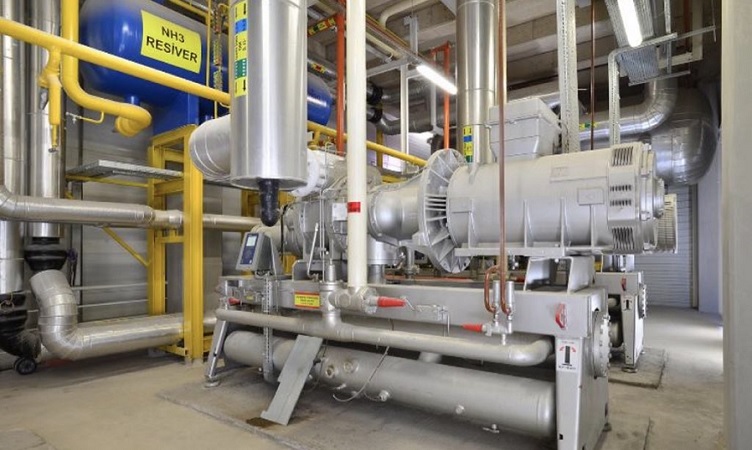
Seafood export facilities rely heavily on highly pressurized liquid ammonia for blast-freezing prawns and fish. When a massive structural failure occurs such as a ruptured high-pressure liquid line, a blown compressor gasket, or a stuck pressure-relief valve the disaster unfolds in two rapid phases
1. The High-Pressure Liquid Line or Receiver: The receiver is the large tank that holds the bulk of the facility’s liquid ammonia. If a pipe connected to this tank shears off due to corrosion, or a main valve seal degrades and blows out, it releases the liquid under immense pressure.
2. Compressor Discharge Line: The compressor shakes and vibrates continuously. Over years of operation, this vibration can cause metal fatigue. If a weld or a gasket on the high-pressure discharge line fails, hot, highly pressurized gas and liquid immediately blast into the room.
3. A Stuck Pressure Relief Valve (PRV): Systems have mechanical valves designed to pop open if pressure gets too high, safely venting gas out of a tall pipe on the roof. If a PRV fails and gets “stuck open,” or if the exhaust piping is broken, it will dump the system’s entire chemical inventory directly into the factory compound.
The Physics of the Deadly Cloud
Once the physical breach occurred, the disaster would have progressed in three rapid phases:
Phase 1: The Violent Expansion (Flash Boiling)
Ammonia is stored inside the pipes as a liquid under high pressure. The moment a pipe ruptures and exposes that liquid to normal atmospheric pressure, it instantly boils. When liquid ammonia turns into a gas, it expands to about 850 times its original volume. A relatively small puddle of liquid instantly creates a massive, room-filling cloud of vapor.
Phase 2: The Ground-Hugging Effect
Normally, ammonia gas is lighter than air and should float away safely into the atmosphere. However, when it flash-boils out of a pressurized pipe, the sudden expansion makes the gas extremely cold. Cold ammonia vapor is heavier than air. Instead of rising, it forms a dense, freezing, white fog that sinks and rolls along the ground.
Phase 3: Infiltration of the Living Quarters
Because the factory was partially shut down for the Sunday holiday, the heavy, white cloud rolled out of the compressor/machinery room and drifted across the factory compound.
Wind and Drafting: Even a mild breeze would push this dense cloud along the ground.
Trapped in Confined Spaces: The guest workers were resting in residential blocks built directly inside this danger zone. Because the gas hugged the ground, it seeped under doors and through ground-floor windows. In confined, poorly ventilated sleeping quarters, the concentration of NH3 spiked from a detectable odor to a highly toxic, lung-burning level in a matter of minutes, incapacitating the workers before they could navigate blindly out of the toxic fog.