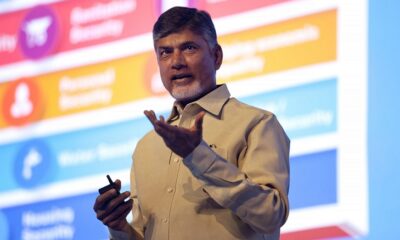
The Centre for Academic Innovation and Advancement (CAIA) at GITAM Deemed to be University, Hyderabad, organized a one-day Leadership Development workshop on “Communication and Influence” on April 22, 2026, aimed at enhancing self-development and professional communication skills among faculty members.
The session was facilitated by Joozar (J), a seasoned corporate trainer with over 26 years of experience across diverse sectors, including IT, Manufacturing, BFSI, Pharmaceuticals, GCCs, and Education. Drawing from her extensive expertise, she introduced participants to key frameworks such as the “4 M’s” — Mission, Members, Mindset, and Method — emphasizing their role in effective leadership and communication.
Highlighting the importance of practice, Joozar elaborated on the “3 E’s” — Presence and Power Postures, Influencing without Authority, and Storytelling Techniques. Referencing insights from Amy Cuddy, she demonstrated the impact of high and low power postures, underscoring the idea that “the mind influences the body, and the body, in turn, shapes the mind.”
She further explained the proportional significance of communication elements: Elevator Pitch (10%), Empathy Mapping (20%), and Expression (70%). Participants were guided on the effective use of Ethos, Pathos, and Logos while presenting themselves or representing the institution.
A key highlight of the workshop was the focus on storytelling as a powerful communication tool. Joozar outlined essential narrative structures involving character, context, conflict, resolution, and message. She also introduced practical frameworks such as Incident–Action–Benefit and Build–Share–Reflect. Through video references featuring Ravi Shankar Iyer, she illustrated how impactful storytelling can drive engagement and influence.
The facilitator emphasized that effective storytelling should connect emotionally, build common ground, and present relatable contexts, while cautioning against elements such as sarcasm, excessive humor, criticism, or sensitive topics. She also addressed common reasons for communication failure, including the curse of knowledge, abstract language, and lack of context.
The workshop featured a masterclass on storytelling for academic impact, focusing on enhancing lecture delivery, improving classroom engagement, and strengthening faculty presence in academic forums at national and international levels. Participants were also introduced to the Cohen–Bradford Influence Model, enabling them to apply empathy and strategic “currencies” to build alignment and influence effectively within academic settings.
The program included interactive discussions, practical scenarios, and reflective exercises tailored to real institutional contexts. The workshop was coordinated by Moses Kotikela from CAIA.
The session concluded with a call to participants to cultivate empathy-driven communication and become impactful storytellers in their academic and professional journeys.